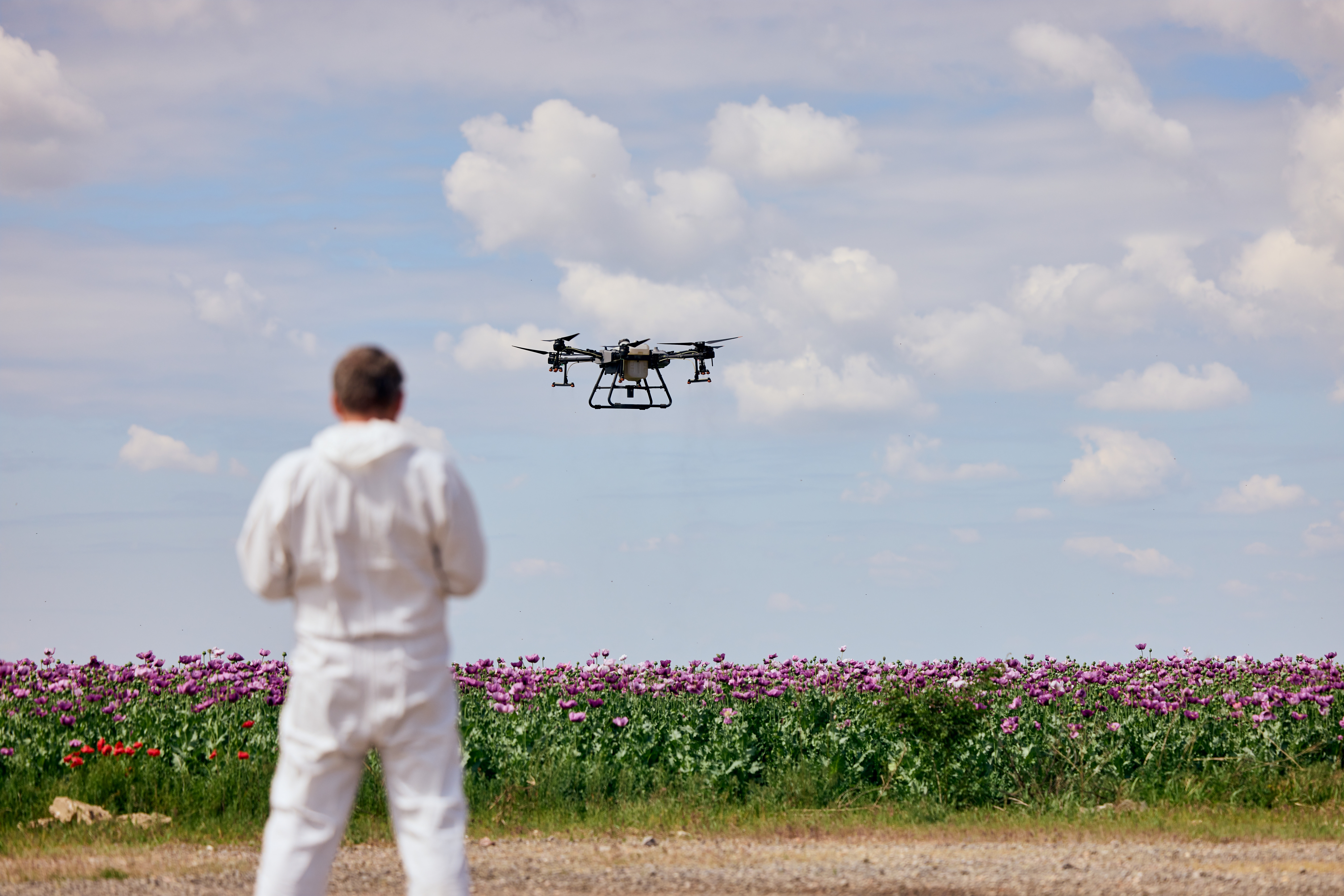
Recent conversations across agriculture and land management have highlighted growing interest in drone seeding as a tool for establishing cover crops in challenging conditions. This blog reinforces and expands on insights shared in a recent article published by West Coast Nut Grower, titled Is Drone Seeding the Future for Cover Crops? We wanted to build on those observations while adding perspective through the NativeSeed Group lens. You can read the original article here:
Is Drone Seeding the Future for Cover Crops? | West Coast Nut
Why Cover Crops Matter
Cover crops play a critical role in long term land stewardship across agricultural, conservation, and habitat focused systems. When properly selected and managed, cover crops help:
- Protect soil from erosion
- Improve soil structure and nutrient cycling
- Suppress weeds and manage moisture
- Increase biological activity and overall soil resilience
These benefits support sustainable production systems and help land managers adapt to variable weather and soil conditions.
A Real World Look at Drone Seeding
In late 2024, a drone seeding demonstration took place in a California almond orchard to evaluate cover crop establishment under wet field conditions. Saturated soils prevented tractors and ground based equipment from entering the orchard, creating a narrow window where traditional seeding methods were not an option.
Drones were used to broadcast cover crop seed between tree rows at approximately 10 pounds per acre. Despite the conditions, multiple species successfully germinated and established. The trial demonstrated that drone seeding can be a viable option when access, timing, or soil moisture limits conventional planting.
Benefits of Drone Seeding for Cover Crops
Drone seeding is gaining attention because it addresses several common challenges associated with cover crop establishment.
Field access in difficult conditions
Drones can operate when fields are too wet or sensitive for equipment, reducing compaction and avoiding damage to soil structure.
Targeted and precise application
Modern agricultural drones allow for accurate placement of seed in orchards, uneven terrain, or irregular field shapes where ground equipment may struggle.
Reduced labor and equipment demands
Drone seeding typically requires fewer people and less machinery, which can be especially helpful during tight planting windows.
Improved timing flexibility
Being able to seed earlier or at optimal moisture conditions can improve establishment success and increase biomass production, especially in perennial systems.
Limitations to Consider
While promising, drone seeding is not a one size fits all solution.
- Seed payload capacity is limited, which can increase application time on larger acreages
- Costs may be higher than traditional seeding methods in some scenarios
- Commercial use requires compliance with aviation regulations and trained operators
As technology continues to advance, many of these limitations are expected to improve.
What the Future May Hold
Beyond orchards, drone seeding is being explored for interseeding cover crops into standing cash crops, accessing steep or remote terrain, and supporting conservation projects where equipment access is limited. Improvements in drone capacity, spreader technology, and seed coating methods will likely expand how and where this tool can be used.
Rather than replacing traditional planting methods, drone seeding is shaping up to be another option in the cover crop toolbox, particularly in situations where timing and access are the biggest barriers.
Final Thoughts
At NativeSeed Group, we see drone seeding as a complementary approach to cover crop establishment. It offers flexibility in wet soils, sensitive fields, and narrow planting windows, while still relying on sound agronomic planning and the right seed selection.
As interest in drone seeding grows, our focus remains on helping growers and land managers choose the most effective strategies for their specific goals, whether that involves traditional equipment, aerial application, or a combination of both.
If you are exploring cover crops and innovative establishment methods, our team is here to help you evaluate what makes the most sense for your operation.